


Following the battles of Lexington and Concord in April 1775, colonial forces from Massachusetts, Connecticut, New Hampshire, and Rhode Island formed a New England army to surround and contain the British troops occupying Boston. This effort became known as the Siege of Boston, in which American militia—later organized as the Continental Army—effectively blockaded the British-held city.

On June 13, 1775, colonial leaders learned that British forces planned to fortify the nearby unoccupied hills surrounding Boston. Four days later, on June 17, 1775, the British discovered that American forces had already occupied these heights and launched an attack. This confrontation became known as the Battle of Bunker Hill.
Meanwhile, the Continental Congress officially established the Continental Army on June 14, 1775, and appointed General George Washington as commander-in-chief on June 15.
Throughout the siege, both armies endured a harsh winter that caused shortages of supplies and manpower. The Americans faced a severe lack of gunpowder—so severe that some soldiers were issued spears in case of a British attack. The British, on the other hand, struggled with shortages of firewood and other necessities.
Determined to break the stalemate, Washington sought artillery to strengthen his position. In November 1775, he ordered Colonel Henry Knox to retrieve cannons captured at Fort Ticonderoga. Knox commenced what came to be known as the noble train of artillery, transporting more than 60 tons of artillery—including over 55 cannons—across difficult terrain to Boston, arriving in late January 1776.
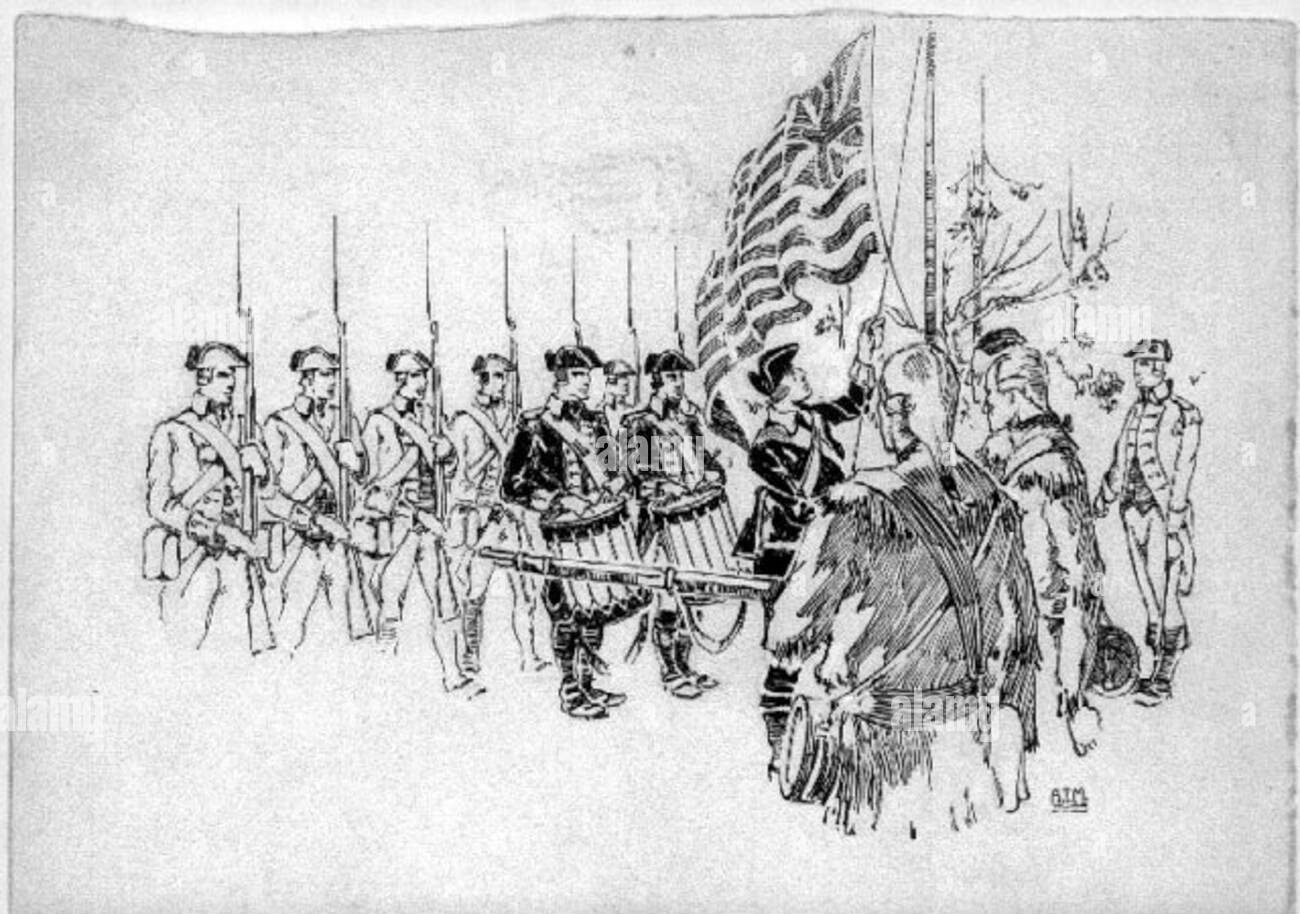
On March 2, 1776, the Continental Army began placing the cannons in fortifications around Boston. During the nights of March 4 and 5, American forces fortified Dorchester Heights south of the city, while cannons in Cambridge bombarded British positions as a diversion. Over the following week, these fortifications were strengthened.
The British initially considered launching an attack but abandoned the plan when they realized their cannons could not reach the American positions on the heights. After an eleven-month siege that began on April 19, 1775, British forces evacuated Boston and sailed to Nova Scotia. The Siege of Boston officially ended on March 17, 1776.
Sources:
- Hawaii Society, Sons of the American Revolution. Broadsheet commemorating the 250th Anniversary of the Declaration of Independence. National Society Sons of the American Revolution, n.d. Accessed January 17, 2026. Revolutionary Times
- Hawaii Society, Sons of the American Revolution. “250th Anniversary Celebration of the Declaration of Independence.” Accessed January 17, 2026. https://bit.ly/3LlwTnC


Leave a Reply