

Resistance to Revolution: The Power of the Lexington Alarm
The Lexington Alarm
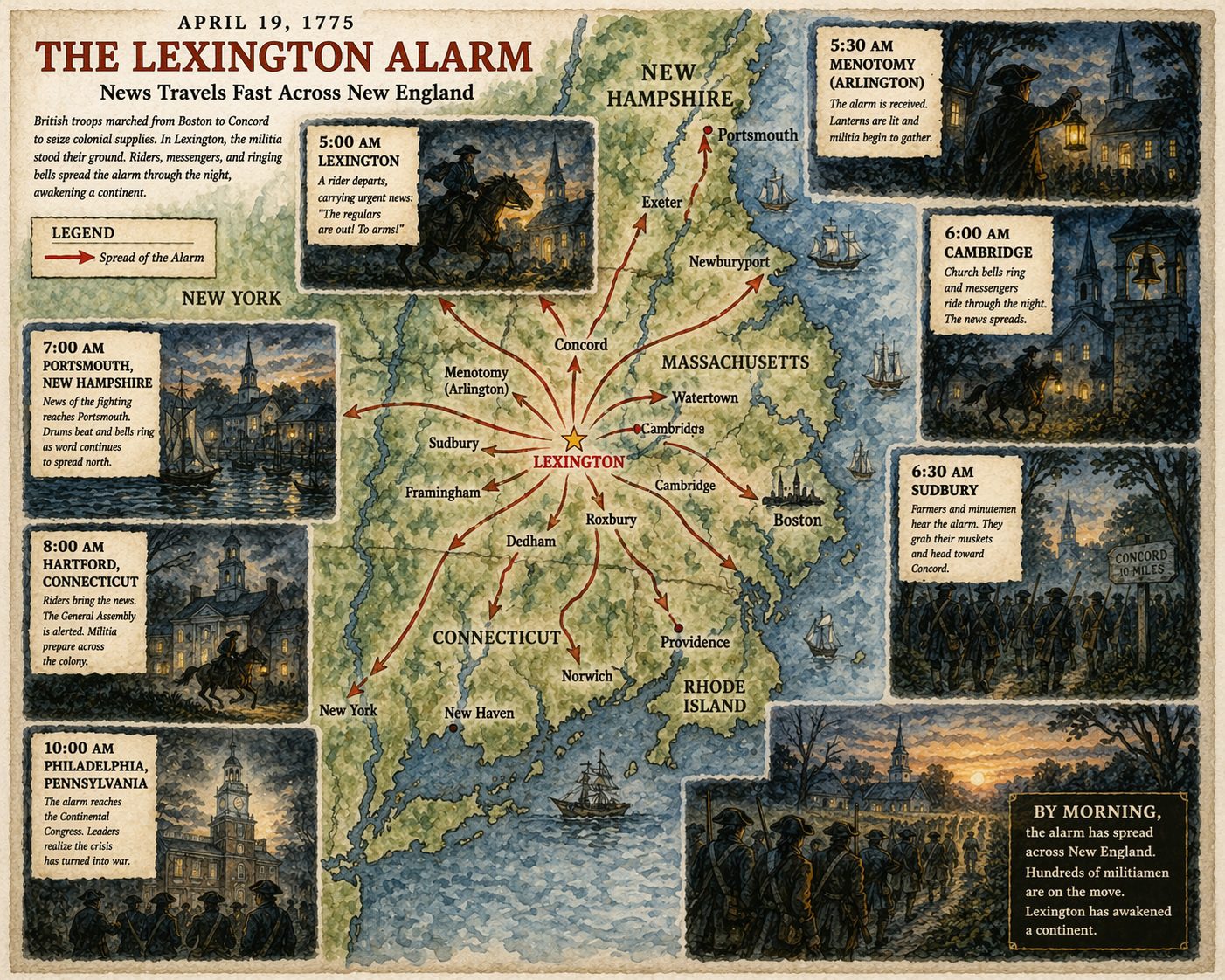
Over time, the phrase Lexington Alarm has come to encompass two closely connected events: first, the warnings sent out on the night of April 18, 1775, alerting the countryside that British troops were marching toward Lexington and Concord; and second, the urgent calls for reinforcements and support that spread outward after fighting broke out on April 19. Together, these messages— created and transmitted through colonial intelligence communication networks—sparked one of the most rapid and far-reaching mobilizations of people ever seen in early American history.

The Lexington Alarm of April 18–19, 1775 stands as a remarkable example of rapid communication and mass mobilization. Often overshadowed by the fighting itself at Lexington and Concord, the alarm revealed both the speed and geographic reach of colonial resistance networks, many of them developed through Committees of Correspondence. Within hours, thousands of militia across New England were under arms, demonstrating how deeply prepared the countryside was for conflict and how quickly local communities could respond to perceived threats.
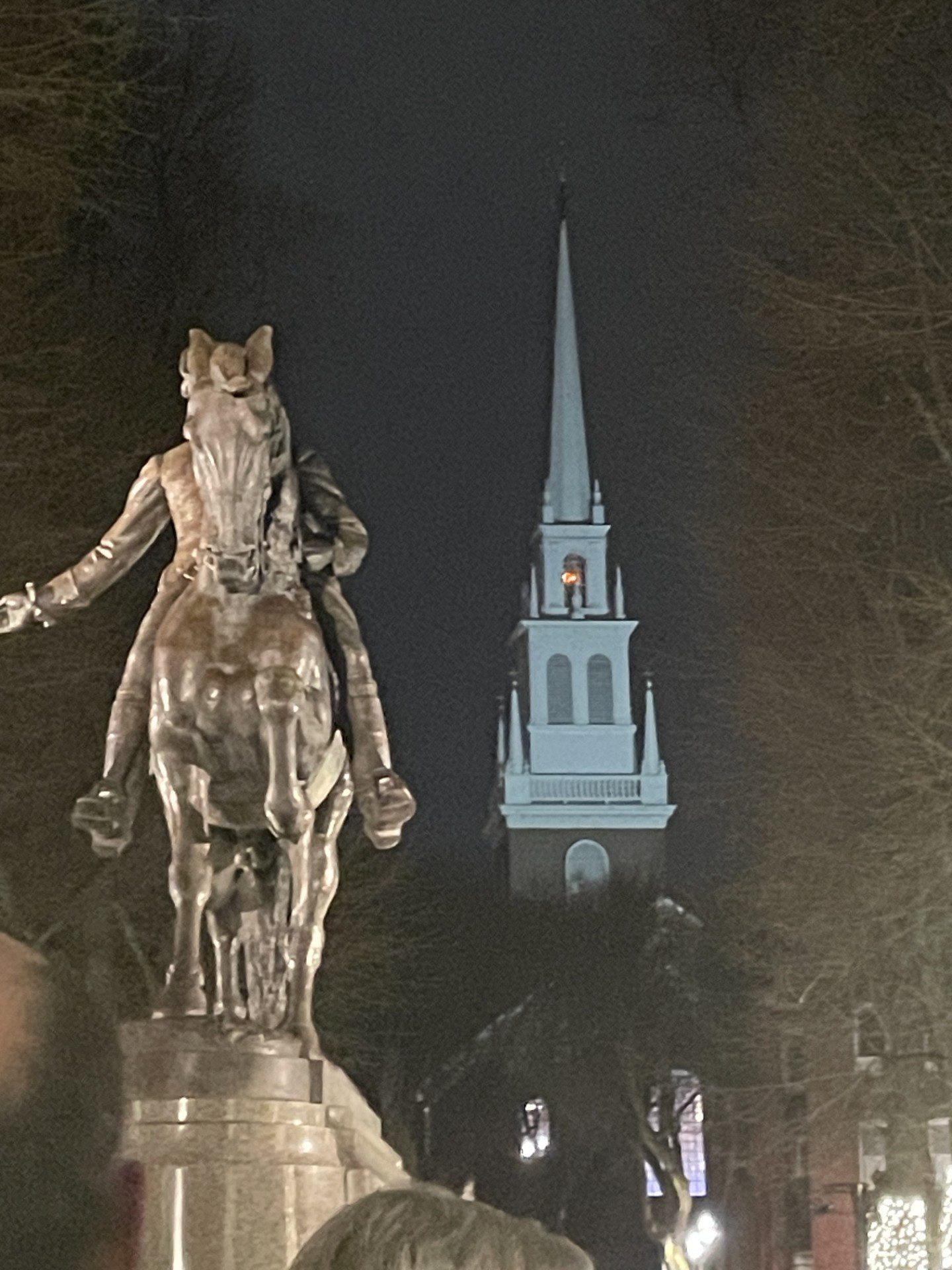
The alarm began on the evening of April 18, 1775, when General Thomas Gage dispatched Lieutenant Colonel Francis Smith with roughly 1,000 British regulars to Concord, under orders to seize and destroy colonial military supplies. Colonial leaders had anticipated such a move and had established informal but effective intelligence systems. Riders—including Paul Revere, William Dawes, and Samuel Prescott—set out to warn local militias to muster. Yet the alarm was not carried by any single messenger. Instead, it spread through a relay of riders, church bells, drumbeats, signal guns, and word of mouth. As each town received the warning, it immediately passed it along, creating a chain reaction that raced across Massachusetts and into neighboring colonies.
The speed of the Lexington Alarm was extraordinary given the period’s limited technology. By dawn on April 19, militia companies had assembled in Lexington; by midmorning, fighting at Concord was already drawing men from dozens of surrounding towns. By nightfall, news had spread far beyond the immediate battlefield. Within 24 hours, the alarm reached New Hampshire, Rhode Island, and Connecticut, and within days it echoed throughout New England. Men left farms, workshops, and fishing boats to join the growing provincial army, often without waiting for formal orders.
The Famous Ride Nobody Remembers
Less remembered, but equally important, was the post-battle alarm that carried news of the fighting far beyond Massachusetts. A fourth rider, Israel Bissell—a post rider—was dispatched from Watertown with a written message from General Joseph Palmer of the Massachusetts militia. The message warned that British reinforcements had landed and that Colonel Smith’s brigade, retreating from Concord to Boston, had been heavily engaged by militia forces.
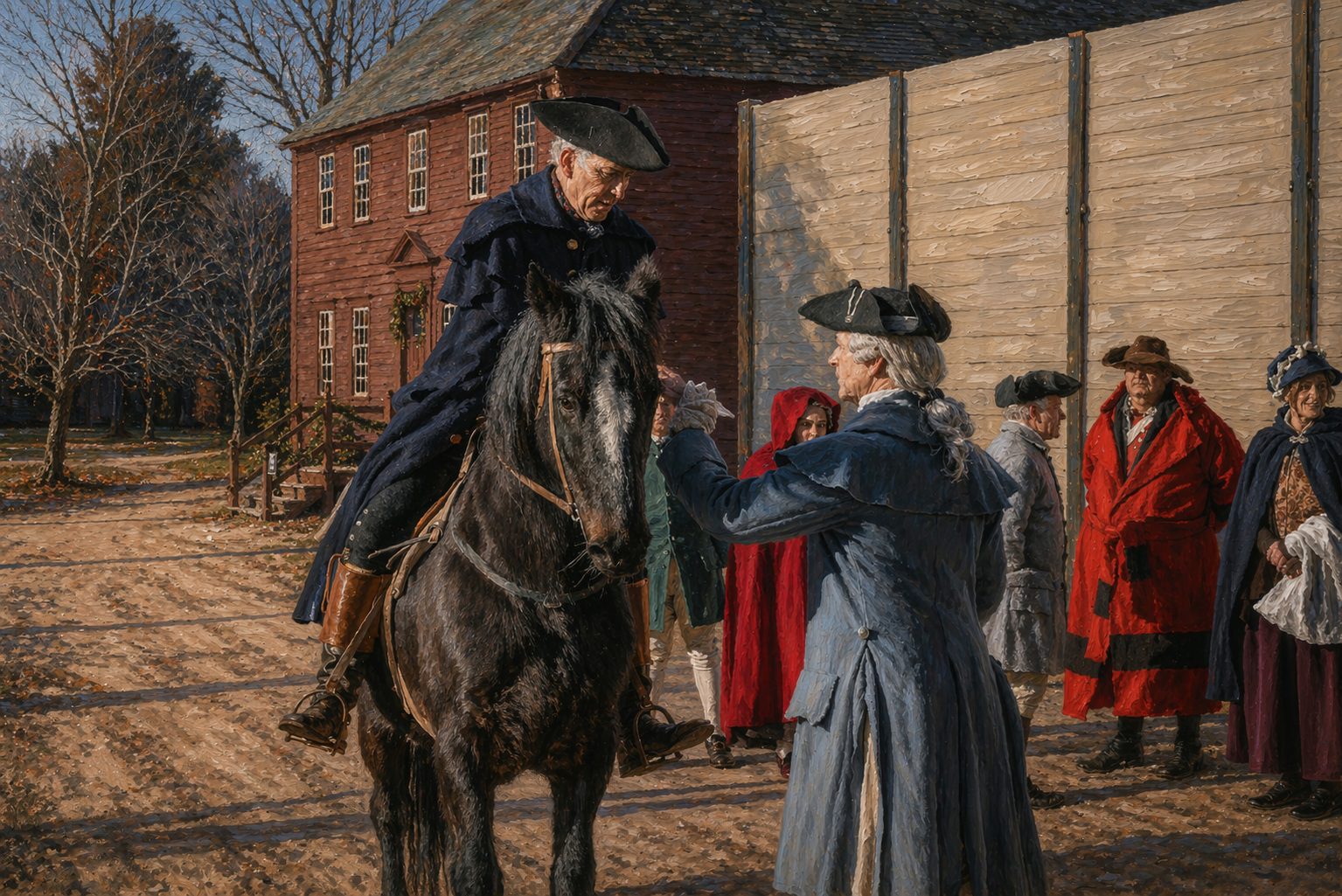
Bissell rode south along the Post Road through Worcester and Hartford, Connecticut, and, according to some accounts, as far as Philadelphia.
From there, additional post riders carried hand-copied versions of the dispatch, each initialed as it moved onward. As the message traveled south, it appeared in newspapers in Baltimore, Annapolis, Williamsburg (Virginia), New Bern (North Carolina), and by early May, as far away as Charles Town, South Carolina.
The scope of the Lexington Alarm was as impressive as its speed. Estimates suggest that 15,000 to 20,000 militiamen converged on the Boston area within days. These forces—farmers, artisans, merchants, and veterans—transformed scattered local militias into a loosely coordinated regional army capable of besieging Boston and containing the British garrison. The scale and rapidity of this response shocked British commanders and revealed the depth of colonial unity and readiness.
In both speed and scope, the Lexington Alarm marked a turning point. It did more than warn of approaching troops—it proved that years of political organizing and militia preparation had culminated in a revolutionary movement ready to act. The alarm awakened a revolution already waiting to begin.
Sources and Further Reading
- Wikipedia. Lexington Alarm. https://en.wikipedia.org/wiki/Lexington_Alarm
- New Hampshire Historical Society. The Midnight Alarm and the Spread of the News.
— Context on regional communications and militia response beyond Massachusetts.
https://www.nhhistory.org - Library of Congress. American Revolution: Lexington and Concord.
— Primary documents, broadsides, and early newspaper accounts of the alarm.
https://www.loc.gov - Connecticut Society of the Sons of the American Revolution (CTSAR). The Lexington Alarm. https://www.sarconnecticut.org/an-alarm-from-lexington/
— Regional analysis of post‑battle dispatches and mobilization. - Walter Smith. The Famous Ride Nobody Remembers. Yankee Magazine 1956-04; Vol 20 Iss 4, p.42. Digital Images. Internet Archive. https://archive.org/details/sim_yankee_1956-04_20_4/page/42/mode/1up




Leave a Reply