

In April of 1889, a small group of men gathered in Concord, New Hampshire, to take the first steps toward establishing what would become the New Hampshire Society of the Sons of the American Revolution. What began as a call to assemble quickly evolved into a structured and purposeful organization dedicated to preserving the legacy of the American Revolution.
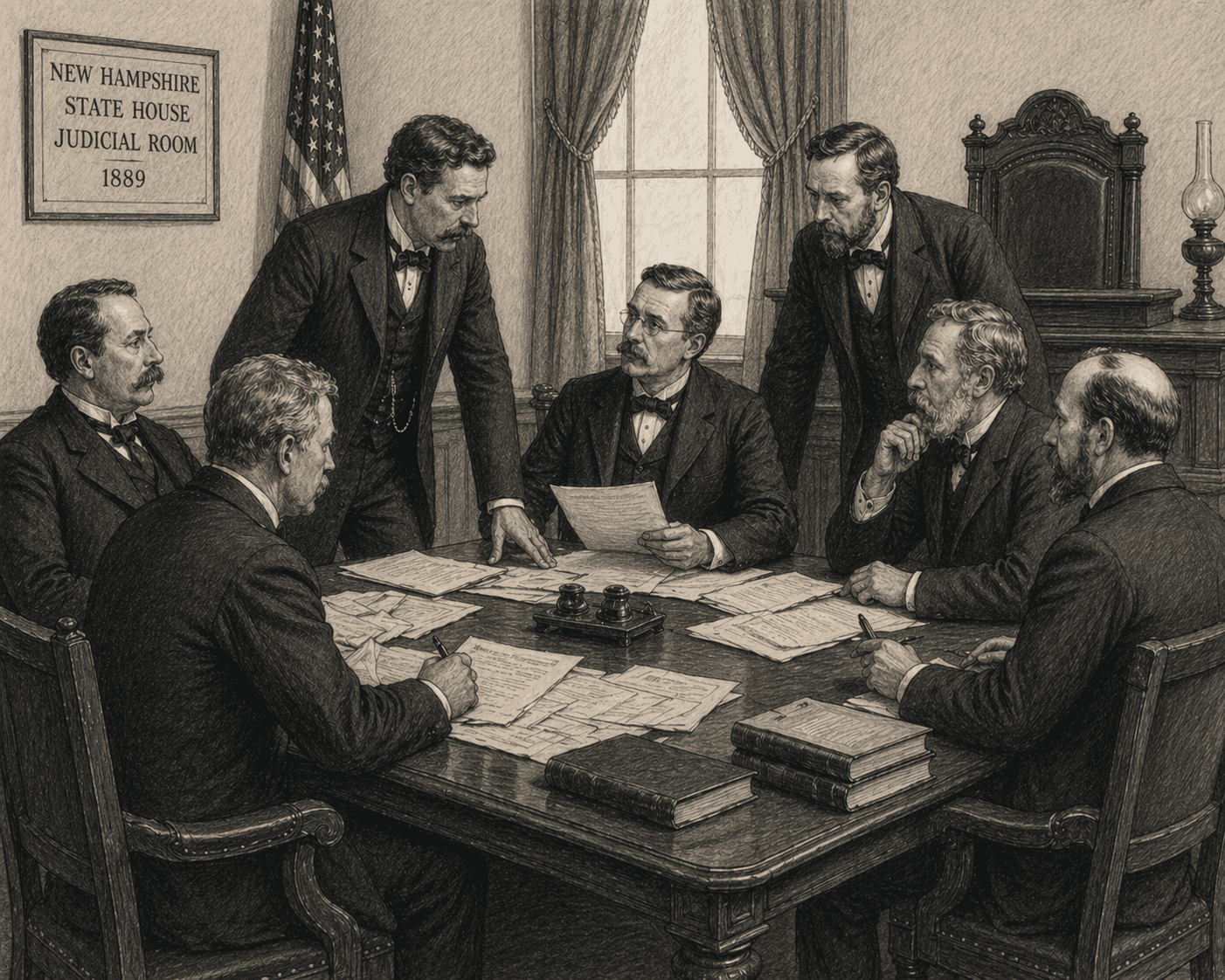
The initial meeting took place on the morning of April 17 in the Senate Chamber of the State House in Concord, NH. The gathering was prompted by a circular issued by a committee of the Sons of the Revolution in New Jersey, encouraging the formation of affiliated societies. Edward Aiken, who received the circular through the Secretary of State, called the meeting to order. One of the first actions was the selection of leadership: C. R. Morrison was chosen as as moderator, while Aiken was appointed secretary.
Recognizing the need for formal structure, a committee consisting of John M. Hill, Howard L. Porter, Leonard A. Morrison, Charles E. Staniels, and Edward Aiken, was established and tasked to draft a constitution and by-laws. This committee, meeting just days later on April 22, drafted a constitution and by-laws to guide the new society.
When the group reconvened on April 24, 1889, membership applications were approved, bringing together men from across New Hampshire who shared a common Revolutionary heritage. Among them were Thomas Jefferson Weeks of Hopkinton; Henry M. Fuller, John Haven Hill, Charles Eastman Staniels, John McClary Hill, Charles R. Morrison, Fred Leighton, Isaac W. Hammond, Sylvester Dana, Lewis Downing Jr., George W. Hill, and A. H. Robinson, all of Concord; Hiram King Slayton, George C. Gilmore, and Moses French of Manchester; Edward Aiken of Amherst; Worthen D. Whittaker of Hinsdale; Samuel L. Gerould of Hollis; Howard L. Porter of Concord; and Leonard A. Morrison of Canobie Lake.
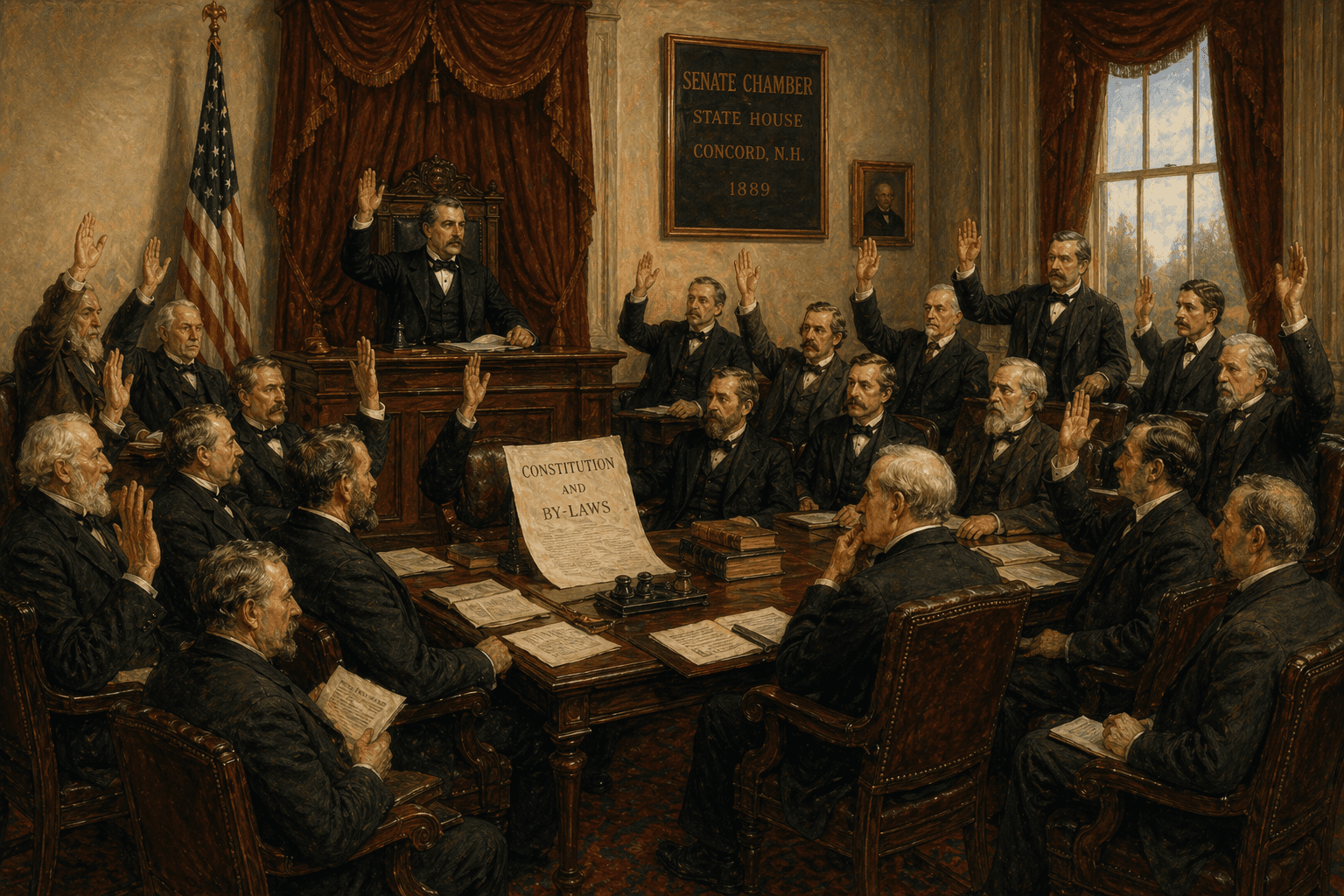
With membership established, the constitution and by-laws were formally presented and adopted—marking the official founding of the Society.
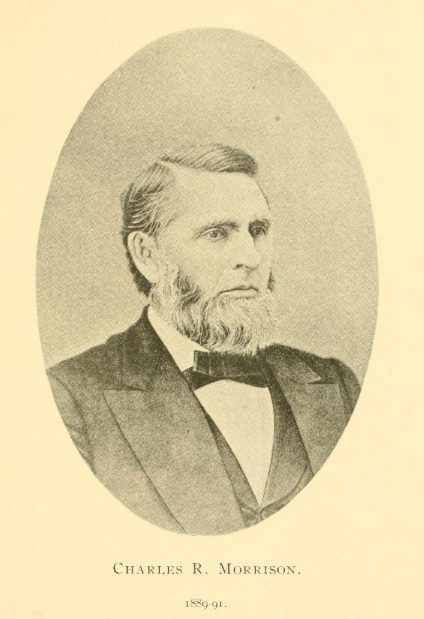
The assembly then elected its first officers to serve until the annual meeting on June 17, 1889. Charles R. Morrison was chosen as President, with Thomas J. Weeks, George C. Gilmore, Sylvester Dana, and Moses French serving as Vice Presidents. Edward Aiken was elected Secretary and Treasurer. A Board of Managers—Hiram K. Slayton, Charles E. Staniels, John M. Hill, Isaac W. Hammond, and Lewis Downing Jr.
Taken together, these April meetings reveal more than the formation of an organization—they capture a moment when historical memory was transformed into collective action. Through careful planning, shared purpose, and a dedication to honoring the past, the founders of the New Hampshire Society laid a foundation that would endure for generations.
That commitment carried forward into the Society’s first annual meeting, held on June 17, 1889. Inspired in part by a widely noted sermon emphasizing New Hampshire’s contributions to the Revolutionary War—particularly the leadership of General John Stark at the Battle of Bunker Hill—the Society took steps to promote greater recognition of the state’s Revolutionary legacy.
Resolutions were past establishing two Committees: one to “induce favorable action by the legislature . . . for a statue to Gen. John Stark:” and another to conduct research and report on New Hampshire’s role at Bunker Hill.
For further reading, see the Proceedings of the New Hampshire Society of the Sons of the American Revolution, 1889–1897.



Leave a Reply