
By Stephen W. Lowther
When the First Continental Congress met in Philadelphia in September of 1774, the principal order of business was to send a letter of grievances to Parliament, and to organize a boycott across the colonies. One of the other accomplishments was to organize an alarm system to spread news of significant events throughout the colonies.
Bostonian Samuel Adams had been instrumental in setting up the Massachusetts Committee on Correspondence in 1772 as a way of communicating with other towns across the colony. Express riders would ride from town to town to rally local militia leaders if necessary. These riders would be provided with fresh horses if necessary to continue their journeys. Bells were rung and muskets fired in the air to signal militia to muster at a predetermined place.
The first such alarm occurred in September of 1774 when General Gage sent 250 troops by boat out of Boston to Cambridge to remove 250 barrels of gunpowder stored there for both British and Militia use. Known as The Powder Alarm, it was significant because the import and sale of gunpowder to colonists had been banned by Parliamentary decree.
In December of 1774, Paul Revere was dispatched by the Massachusetts Provincial Government to ride the 66 miles to Portsmouth to warn of similar actions to be taken at Fort William and Mary at the mouth of the Piscataqua River on what is now New Castle Island. This led to the capture of the fort by local militia and confiscation of a dozen cannons and 100 barrels of gunpowder that were ultimately used by colonists at the Battle of Bunker Hill.
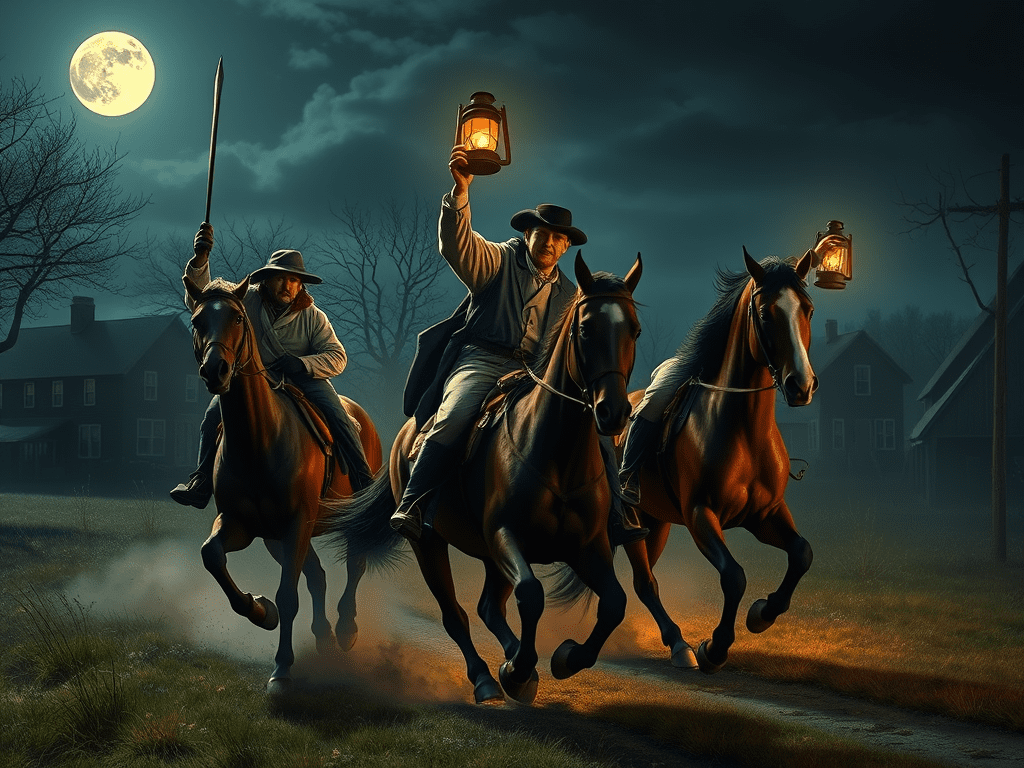
The biggest test of the alarm system, however, was to come in April, when General Gage dispatched British Colonel Francis Smith with 1,000 troops to “seize and destroy all the artillery, ammunition, provisions, tents, small arms and all military stores whatever” on the evening of April 18th. This triggered a series of events as riders, including Revere, William Dawes, Samuel Prescott, set out to warn local militia to muster their companies.
Revere, Dawes, and Prescott set out to Lexington to warn Sam Adams and John Hancock that they were to be arrested by Colonel Smith and sent to London to be tried for treason. Only Prescott made it as far as Concord as Revere and Dawes were captured, their horses confiscated, and they were released on foot.
A fourth rider, Israel Bissell, a post rider, was given a message from General Joseph Palmer of the Massachusetts Militia, that reinforcements had landed and were marching to support Colonel Smith’s brigade, which was under heavy fire from militia while retreating from Concord back to Boston.
Bissell rode from Watertown along the Post Road to Worcester, continued south to Hartford, Connecticut, and, according to some legends, rode all the way to Philadelphia.From Philadelphia, separate post riders carried the same message, which was hand copied and initialed at each stop. As the dispatch reached further south, copies were printed in newspapers in Baltimore, Annapolis, Williamsburg (Virginia), New Bern (North Carolina) and, by early May as far south as Charlestown, South Carolina.
The speed at which The Lexington Alarm allowed militia to make their way to the engagement certainly caught the British by surprise. According to the American Battlefield Trust, militia from as far away as Jaffrey, New Hampshire and all parts of Massachusetts outnumber Redcoats nearly 4,000 to 1,500 with 300 casualties on the British side to just 93 Colonials wounded or killed.