


Remembering John Stark on the Anniversary of His Death
On this day in 1822, New Hampshire lost one of its greatest Patriots. General John Stark, Revolutionary War hero and champion of independence. John passed away at his home in Derryfield (now Manchester) NH at the age of 93. More than two centuries later, his life—and his words—still define the Granite State.
Born to Irish immigrants in 1728, Stark was shaped by New Hampshire’s rugged frontier. At the age of 23, Stark’s resilience was tested when he was captured by Abenaki Indians during a hunting expedition. Forced to “run the gauntlet,” he surprised his captors by striking the first warrior instead of fleeing. His boldness so impressed the tribal chief that Stark was adopted into the tribe. He lived among the Abenaki for a year before being ransomed back to colonial society. As a young man, he reportedly survived the ordeal by sheer resolve and courage—traits that would define his life.
His deep frontier experience later made him a natural leader during the French and Indian War. He became a top lieutenant in the legendary Rogers’ Rangers, an elite unit specializing in scouting and special missions. In 1759, the Rangers were ordered to attack an Abenaki settlement – one that included Stark’s adopted Native family. Refusing to participate, Stark resigned his commission and returned home to Derryfield, where he began a new chapter of life with his wife, Elizabeth “Molly” Page.

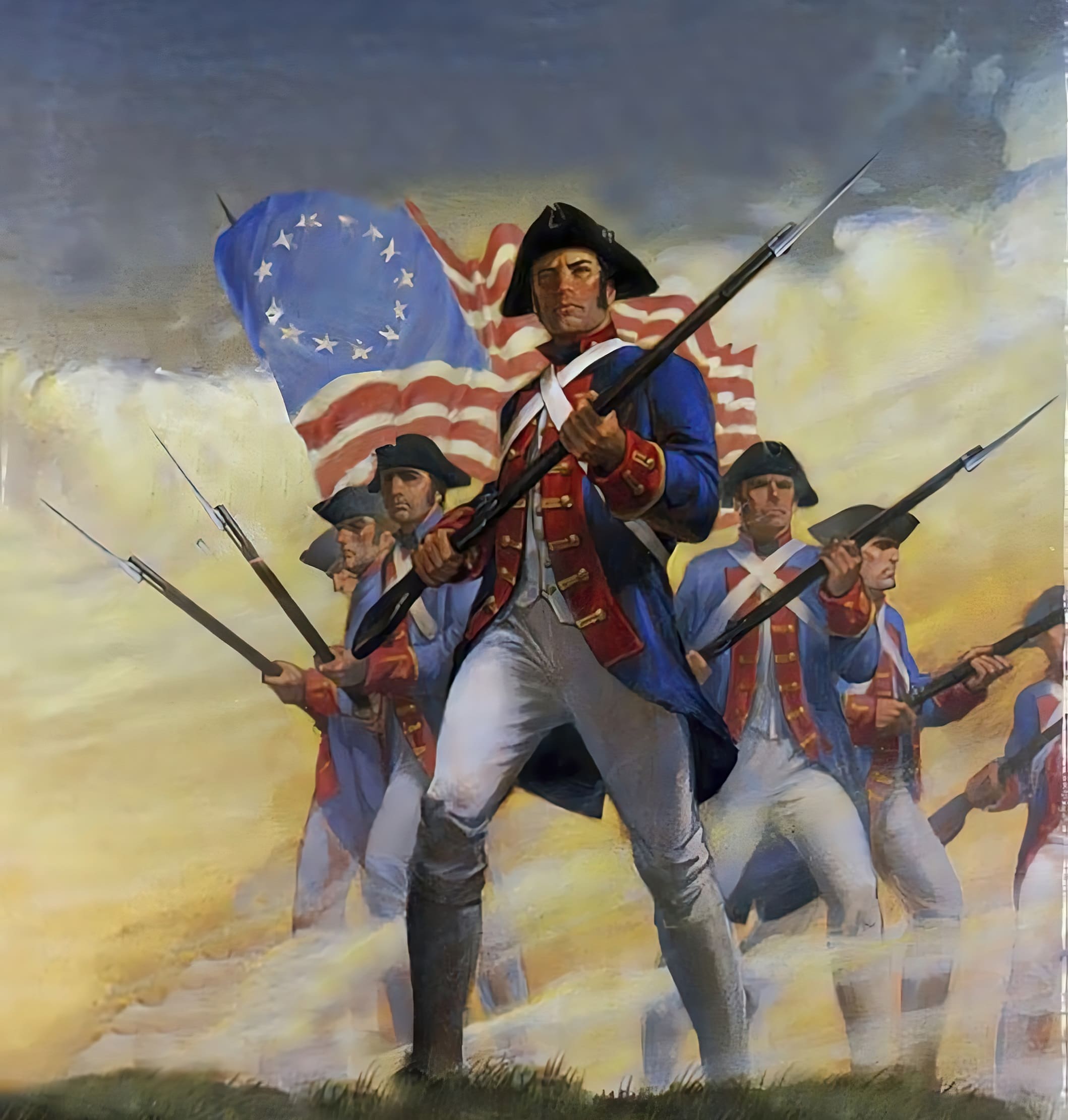
With the outbreak of the American Revolution, Stark again stepped forward, commanding the 1st New Hampshire Regiment at the Battle of Bunker Hill, earning the respect of George Washington.
In the first two years of the war, he participated in a number of significant events, including the defense of New York, the American retreat from Canada, the Battle of Trenton and the Battle of Princeton.
While Stark was never motivated by rank alone, when passed over for promotion, he resigned rather than compromise his principles. Though he made it clear he would still defend New Hampshire.
That fierce independence led to his greatest triumph. In August 1777, Stark led New Hampshire militia forces to a decisive victory at the Battle of Bennington, destroying a British supply column and helping pave the way for General Burgoyne’s surrender at Saratoga. The win altered the course of the war and secured Stark’s place in American history.

After independence was secured, Stark returned to a quieter life as a farmer in Derryfield, where he spent the rest of his years. In 1809, veterans invited him to attend a commemoration of the Battle of Bennington. Too ill to travel, Stark sent a letter instead. He closed it with the words:
“Live free or die. Death is not the greatest of evils.”
That phrase became the NH state motto in 1945. It remains a lasting testament to Stark’s life, values, and legacy.
Today, as we mark the anniversary of his passing, we remember both a general, and a courageous man whose devotion to liberty continues to inspire.
Sources:





Leave a Reply